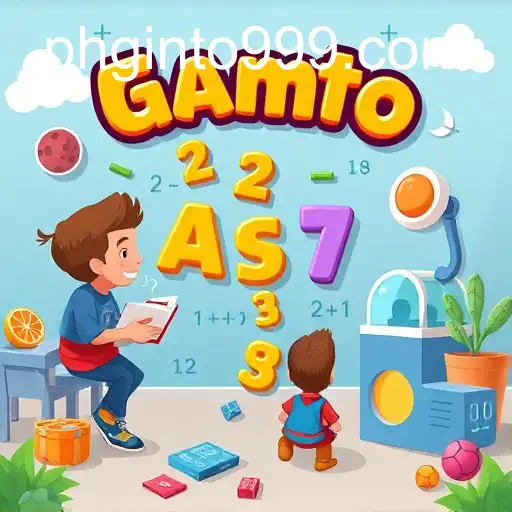
In today's digital age, the way we approach learning and education has drastically changed, with technology playing a pivotal role. One flourishing niche within this digital educational landscape is the category of 'Educational Games.' These are games designed with the primary goal of facilitating learning and development in an interactive and engaging manner. Utilizing 'phginto,' a keyword often associated with this category, individuals can access a plethora of these educational tools online.
Educational games can cover a wide range of subjects, including mathematics, language arts, science, and history. They aim to make learning enjoyable by incorporating elements of play, which not only help to engage students but also help retain their interest. This gamified form of education is particularly effective for younger audiences who might find traditional learning methods less appealing.
By integrating educational content with game mechanics, these games provide rewards, challenges, and instant feedback, which encourage players to learn by doing. For example, a game designed to teach multiplication might allow players to solve problems to earn points, advance levels, or unlock new stages. This immediate sense of accomplishment and the ability to track progress adds a layer of motivation for learners that traditional methods might lack.
Moreover, educational games can also foster important skills such as problem-solving, critical thinking, and collaboration. Many games include puzzles or require strategy and planning, which can aid in cognitive development. Some multiplayer educational games further promote communication skills and teamwork, as players need to collaborate to solve problems or achieve common objectives.
In addition to fostering cognitive and social skills, educational games are also accessible to a diverse audience. They are designed to cater to various learning styles, making them versatile tools for personalized education. Whether a student is a visual learner who benefits from vibrant graphics or a kinesthetic learner who prefers interactive activities, educational games can be tailored to suit individual needs.
With the integration of cutting-edge technologies such as virtual reality (VR) and augmented reality (AR), educational games are becoming more immersive. These technologies can further enhance learning experiences by simulating real-world environments, providing learners with hands-on experiences without the constraints of traditional classrooms.
The keyword 'phginto' opens the door to a vast selection of educational games, tailored to different age groups and learning objectives. From early childhood development to adult education, these games pave the way for lifelong learning in a fun, engaging, and effective manner.